


German Language and Literature
Lecture Series
Lecture Series
Craig Young Scholars Series
The Rutgers German Department is excited to introduce a lecture series devoted to young scholars of German!
Generously funded by Dr. Charlotte M. Craig and her husband, Bob Craig, the Craig Young Scholar Series aims to provide advanced graduate students, lecturers, and junior professors of German with the opportunity and venue to present their research to the public. Each semester, the German Department will invite young scholars of German from around the country to present a public lecture at the university.
Charlotte M. Craig Distinguished Visiting Professorship
Each spring semester Rutgers German hosts a renowned professor of German Studies, who teaches an undergraduate and a graduate course and presents the prestigious Craig Lecture. The professorship has been funded since 1998 by a generous annual gift from Dr. Charlotte M. Craig. For more information and a list of recent Craig Professors, click here!
Max Kade Writer/Scholar in Residence, Charlotte M. Craig Distinguished Writer/Scholar in Residence
Each fall semester the department welcomes a writer, scholar, journalist, filmmaker, or translator to campus. The grant, funded by the Max Kade Foundation and enhanced by Dr. Charlotte M. Craig, allows the visitor time to work on a creative project, and to participate actively in department life. For more information and a list of recent Craig-Kade Writers/Scholars in Residence, click here!
Rodig Lecture and Seminar
The Rodig Lecture and Seminar brings an eminent scholar to Rutgers each semester for a public lecture and seminar, and informal interactions with students and friends of the department. The Rodig Lecture and Seminar is generously funded by an annual gift from Mrs. Lillian Rodig Maxwell. For more information and a list of recent Rodig lecturers, Dr. Alexander E. Pichugin!
Botstiber Lecture Series
The Botstiber Lectures, sponsored by the Botstiber Institute for Austrian-American Studies, is an ongoing series that brings scholars to Rutgers to speak on a variety of topics related to Austrian-American Studies. For more information and a list of recent Botstiber lectures, click here!
German Forum Talk Series
In 2004, the German Department launched the highly successful German Forum talk series (formerly known as the Brown Bag lectures). The series, organized by Professor Martha Helfer, provides an informal forum for faculty and students to present work in progress. Attendance at these events is high throughout the year, as the German Studies community at Rutgers enjoyed "food for the mind and food for the body."
Craig Young Scholars Series
Generously funded by Dr. Charlotte M. Craig and her husband, Bob Craig, the Craig Young Scholar Series aims to provide advanced graduate students, lecturers, and junior professors of German with the opportunity and venue to present their research to the public. Each semester, the German Department will invite young scholars of German from around the country to present a public lecture at the university.
Upcoming Craig Young Scholar Series Events
Fall 2022
Susan Morrow, Princeton University
Expressive and Inexpressive Movement: Pantomime and Bodily Virtuosity in Jean-Georges Noverre’s Lettres sur la dance et sur les ballets (1759/1760)
Wednesday, November 16, 2022, 12:15pm
AB 4050 (West Wing), and via Zoom
Jean-Georges Noverre was the most famous ballet master in 18th-century Europe. The treatise that established his reputation, Lettres sur la dance et sur les ballets (1759/1760) theorizes a mode of dance that emerged in the late 17th and early 18th century, often referred to as ballet d’action or pantomime ballet, which staged wordless, danced dramas incorporating pantomime and tableaux vivants. This talk will concern the distinction made in Noverre’s Letters between the ‘expressive,’ mimetic movement technique of pantomime and the ‘inexpressive,’ non-mimetic character of virtuosic dance technique. It argues that Noverre takes these movement techniques to have distinct epistemic implications with important consequences for understanding the relationship between performance and text.
Susan Morrow is Assistant Professor of German at Princeton University. Prior to joining the Princeton German Department in Fall 2022, Morrow was a postdoctoral fellow at the Universität Potsdam (Department of Philosophy and Center for Post-Kantian Philosophy) and the Leibniz Center for Literary and Cultural Research (ZfL) Berlin (History of Theory Research Area). She has previously taught at Yale University (Department of German) and the Freie Universität Berlin (Department of Comparative Literature). She received her Ph.D. in German from Yale in 2019. Her dissertation, “Schematism: Poetics on the Way to Kant, 1760–1790” was awarded the ZfL’s 2019 Carlo Barck Prize.
Spring 2020
Elisa Ronzheimer, University of Bielefeld
Transit: Narrating Diaspora, Escaping History
Wednesday, March 11, 2020, 11:30am
Elisa Ronzheimer is Akademische Rätin in the department of Comparative Literature at Bielefeld University. Elisa studied piano, German and French literature in Bonn, Cologne, Paris and New Haven. In 2018 she completed her PhD in German at Yale University with a dissertation entitled "Poetologies of Rhythm: Verse Forms ca. 1800 (Klopstock, Hölderlin, Novalis, Goethe, Tieck)" which will appear at De Gruyter in 2020. Elisa is interested in eighteenth-century poetics and aesthetics, theories of the lyric and concepts of poetic form between music and language. She currently works on a second book project which traces the 'afterlife' of stylistics as a method of interpretation in structuralist and post-structuralist literary theory.
Fall 2019
Christophe Koné, Williams College
Doll Making and Doll Thinking in ETA Hoffmann's The Sandman
Tuesday, October 15, 2019, 1:00pm
In his talk on ETA Hoffmann’s romantic tale Der Sandmann, Christophe Koné examines the ongoing processes of doll making and doll thinking, a term he coins drawing from Jentsch’s and Freud’s essays on "The Uncanny," Thing and Queer theories. Shifting the focus from the Sandman to the doll Olimpia, Koné argues that the story revolves around doll makers and thinkers and that the narrative ultimately aims to turn the reader into a doll thinker.
 Christophe Koné is an Assistant Professor of German and Comparative Literature at Williams College. He teaches language and literature classes. He holds a Masters in German Studies from Université Lumière, Lyon 2, France and a PhD in German Studies from Rutgers University. He is currently finishing a book manuscript on “Doll Thinkers and Doll Makers in Modern German Culture.” His research interests include German Romanticism, Modernism, Film Studies, Art History, Comics, and Fashion Studies.
Recent Publications:
"The Key to Voyeurism: Haneke's Adaptation of Jelinek's The Piano Teacher" with Fatima Naqvi in On Michael Haneke. Edited by Brian Price and John David Rhodes. Detroit: Wayne State University Press, 2010, p. 127-150.
"Aschenbach's Homovisual Desire: Scopophilia in Thomas Mann's Der Tod in Venedig" in Thomas Mann, Neue kulturwissenschaftliche Lektüren. Edited by Stefan Börnchen, Georg Mein, and Gary Schmidt. München: Wilhelm Fink Verlag, 2012, p. 95-106.
“Unbehagen in der Oper: Robert Lepages Ring-Bau und die Met-Maschine” in Jenseits von Bayreuth. Richard Wagner heute: Neue kulturwissenschaftliche Perspektiven. Edited by Stefan Börnchen, Georg Mein, and Elisabeth Strowick. München: Wilhelm Fink Verlag, 2014.
“Learning to Flirt with Don Juan” in Flirtations, Rhetoric and Aesthetics: This Side of Seduction. Ed. by Daniel Hoffman-Schwartz, Barbara Natalie Nagel, and Lauren Shizuko Stone. New York: Fordam University Press, 2015.
Erica Weitzman, Northwestern University
“Senseless phalluses snot in the face of the world”: Gottfried Benn and the Endgame of Materialism
Wednesday, October 30, 2019, 12:15pm
German realism is dominated by a paradox: on the one hand, its authors want to turn their attention to the real things of the real material world; on the other, they want to contain that world within idealist (which is to say, for them, humanist) terms. The controversial Expressionist Gottfried Benn, a doctor by trade, was heavily influenced by such paradoxes and debates at the start of his writing career. This talk looks at the representational strategies of Benn’s early, experimental-autobiographical “Rönne-novellas” (1914-1916), to show how, in his work, Benn both attacks the previous century’s humanist optimism and brings it to its negative, obscene culmination. In doing so, the talk also reveals the problematic basis of humanism itself in its phobic constitution of “sheer matter.”
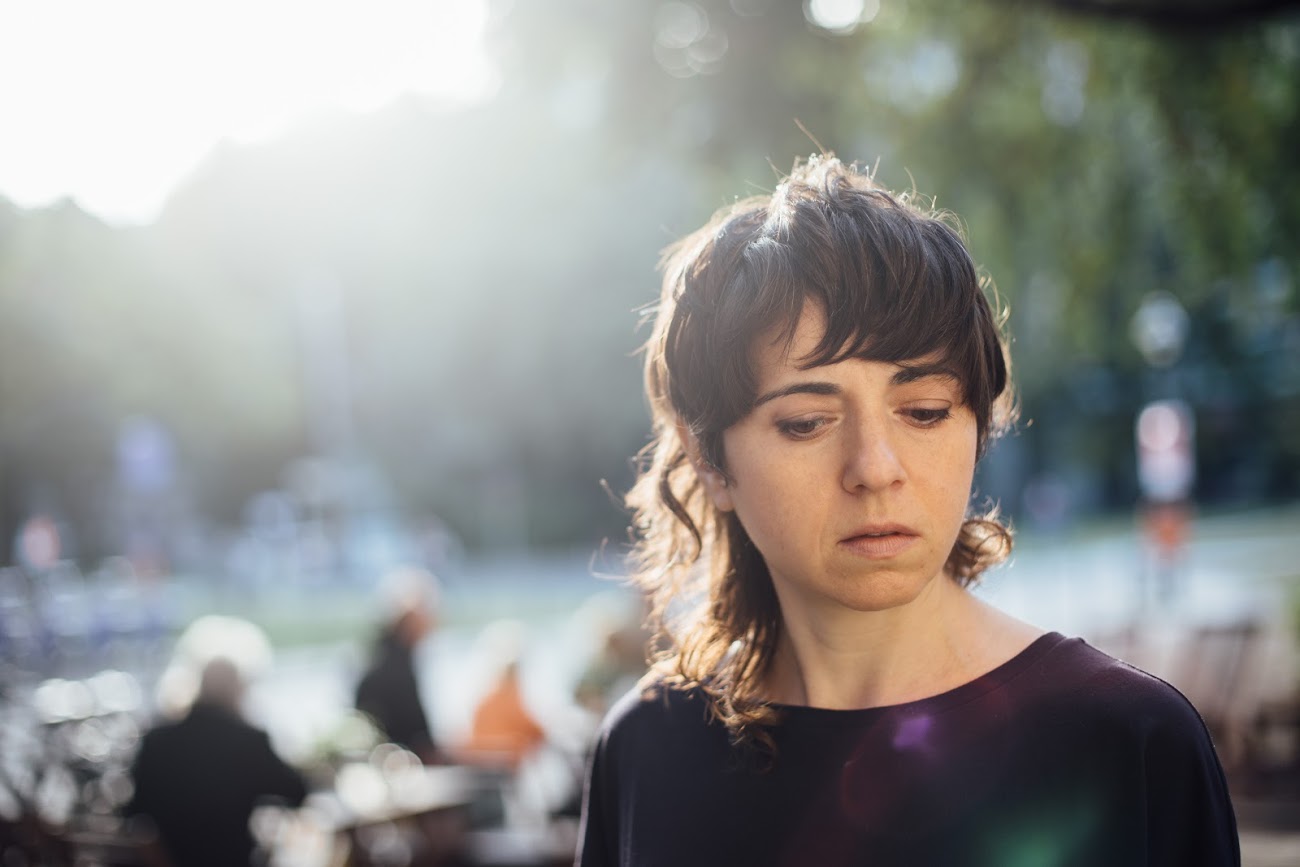 Erica Weitzman is Assistant Professor in the Department of German at Northwestern University. She received her Ph.D. in Comparative Literature from New York University in 2012, and has also held positions at Konstanz Universität, the University of California, Berkeley, and as a fellow with the Alexander von Humboldt-Stiftung at the Zentrum für Literatur- und Kulturforschung, Berlin. She is the author of the monograph Irony’s Antics: Walser, Kafka, Roth and the German Comic Tradition (Northwestern UP, 2015) and co-editor of the collected volume Suspensionen. Über das Untote (Fink, 2015), and has published numerous articles on authors including Stifter, Fontane, Kafka, Walser, Sacher-Masoch, Karl Rosenkranz, Gustav Freytag, Ismail Kadare, and Jacques Derrida. She is currently completing her second book project, At the Limit of the Obscene: Realism, Aesthetics, Profanation, which looks at the representation of materiality in nineteenth- and early twentieth-century German realism.
Fall 2018
Teresa Kovacs, University of Michigan
Staging the Ruinous
Abandonment, Decay, and Destruction in Contemporary Performances
October 10, 2018, 12:30pm
Contemporary theatre and performance are deeply entangled with abandonment, decay, and destruction. While publications on ruin and ruination in other disciplines like urban studies, literature or visual arts have steadily increased within the last years, theatre scholars have thus far failed to analyze the implications of ruins for contemporary performance practices. I argue that German-language theatre since the second half of the twentieth century has been uniquely shaped by decomposition. In focusing on the theatrical texts of Heiner Müller and Elfriede Jelinek and their stagings and musical arrangements by Heiner Goebbels, Dimiter Gotscheff, Dieter Kaufmann, and Johan Simons, I will grapple with the following questions: Which concepts of theatrical temporality are connected to decay? How do humans relate to their ruinous surroundings and how is this relationship transformed into the theatrical structure? How do we perceive the ruinous performance?
 Teresa Kovacs is a Visiting Scholar at the Department of Germanic Languages and Literatures at the University of Michigan (Erwin Schrödinger Fellowship, FWF). Her current book project deals with performative practices that evolve around decay manifested themselves between Renaissance and contemporary theatre and performance. She received her Ph.D. at the University of Vienna with a dissertation on Elfriede Jelinek’s “Secondary Drama,” which won several awards. Publications (Selection): Drama als Störung. Elfriede Jelineks Konzept des Sekundärdramas (transcript 2016), Schreiben als Widerstand. Elfriede Jelinek & Herta Müller (Praesens 2017, co-ed. with Pia Janke), Postdramatic Theatre as transcultural Theatre (Narr 2018, co-ed. with Koku Nonoa), Schlingensief-Handbuch (in preparation, Metzler 2020, co-ed. with Peter Scheinpflug and Thomas Wortmann).
Spring 2018
Franziska Humphreys, EHESS - Paris
Without Image - Refuge of all Images: On Some of Walter Benjamin's Dream Narratives.
March 21, 2018, 12:15pm
Based on several dream narratives by Walter Benjamin, my paper questions the syntactic ramifications and motivic tensions between the theoretical conceptualization and the literary claims of this author. In attempting a constellatory reading of these texts by comparing, in particular, The Arcades Project and On the Origins of German Tragic Drama, I show that Benjamin not only conceptualized allegory in theoretical terms, but that he literally dreamed it up. I argue that a certain multilingualism inherent in the text and an alertness to mediatic leaps are decisive for the reading of any text. An allegorical reading, in the very strict sense of the word limned in what follows, breaks with the representational function of language in order to retrace and reflect its unique relief and physiognomy.
 Franziska Humphreys studied Comparative Literature, French Literature, and Art History in Munich and Paris. Currently, she holds a DAAD position as specialist lecturer at the Ecole des hautes études en sciences sociales (EHESS) and the Fondation Maison des Sciences de l’Homme, where she heads the German-French translation program.
Antje Pfannkuchen, Dickinson College
"Reading the Unreadable - Hieroglyphics between metaphor and electrophore"
February 22, 2018, 3:15pm
Around 1800 hieroglyphics were popular as a concept and a reference in various fields, from science to theology to poetry. Attempts at the decipherment of the Egyptian hieroglyphs coexisted with the use of them as metaphors for various mysteries. Romantics like J.W. Ritter and Novalis learned about hieroglyphics from J.G. Herder and then dreamed of a “Golden Age, when all words become—figurative words—myths—And all figures become—linguistic figures—hieroglyphs—.” (Novalis) While they promised deep wisdom, hieroglyphs remained mostly unreadable, at least until 1822 when J.-F. Champollion published the first decipherments of the Rosetta stone. The Romantic’s desire to relate hieroglyphs to linguistic and therefore comprehensible signs aimed in two directions: to make the world more wondrous and at the same time to find deeper understanding of life’s mysteries. Some of the enigmatic inquiries the Romantics pursued lay in the most advanced sciences of their time and in images and signs they found in nature. A central question was whether and how these signs could be read.
 Antje Pfannkuchen teaches at Dickinson College in Pennsylvania. She has published on Georg Christoph Lichtenberg, Johann Kaspar Lavater, Johann Wilhelm Ritter and works on a book manuscript tracing the connections between Romanticism and the invention of photography. Most recently she coedited “The Technological Introject. Friedrich Kittler between Implementation and the Incalcuable.”
Fall 2017
Tammo Feldmann, Stanford University
"Nature-Reading without Nature-Writing: Poetic Sensibility in Friedrich Schelling's Naturphilosophie"
September 20, 2017, 2pm
Friedrich Schelling and Friedrich Schlegel appear to occupy opposing poles on a spectrum of Romantic worldviews. Schlegel rejected a philosophy based on first principles and relied on the empirical sciences rather as inspiration than taking them to provide objective truth: He saw human experience as context-dependent, situated in the particularities of history and language. He is remembered primarily as a literary critic and aesthetic theorist. Schelling, by contrast, understood himself to be a systematic philosopher in the Kantian tradition—a philosopher who leaned heavily on the findings of the empirical sciences of his time. Yet this familiar dichotomous account of German Romanticism—which places Schlegel, particularity, and poetry on one side, and Schelling, systematic philosophy, and science on the other—overlooks the common intellectual commitments of these strange philosophical bedfellows. Schelling and Schlegel shared the view that the natural world can only be understood relationally: nature is critically received through our sensory faculties and also actively constructed through our intellects. This shared notion of nature as a relational concept engenders and necessitates a particular poetic sensibility in Schelling’s Naturphilosophie. Instead of erecting an opposition between human beings and an external natural world, Schelling, in soaring lyric moments, forges a place for human experience within nature. Schelling's poetic readings of nature resist crude anthropomorphism as much as they resist reductive naturalism and guide us towards poesis, a creative poetic engagement with the natural world that allows us to apprehend nature as simultaneously external and internal, intelligible and unfathomable.
 Tammo Feldmann is a fifth year PhD student at Stanford University and visiting research scholar at Harvard University. He specializes in German intellectual history from the late eighteenth to the late nineteenth century with particular attention to the intersection of Continental philosophy and the history of science. He has taught survey courses on German Romanticism as well as courses on Philosophy and Literature. His dissertation, “Humanism without Anthropocentricism” explores the relationship between Romantic Naturphilosophie and German literature of the early 19th century.
Spring 2017
Henrik S. Wilberg, University of Minnesota (Morris)
"Monogrammatology, or: Language before Critique (Kant and Herder around 1774)"
March 8, 2017, 12pm
“Before” indicates how the German eighteenth century comes to summon language in a double sense. In the most straightforward of these, it addresses what is known as the “pre-critical” period in German letters: the period prior to the publication of the first edition of Immanuel Kant’s Critique of Pure Reason (1781). The second sense is topological and incorporates a characteristic feature of “critique” itself: a decisive turn in the thinking of language takes place in what contemporaries themselves clearly recognized as “a critical age”. In this view, the emergence of something like a critical perspective changes the possibilities for thinking language: If language is to appear, it must appear before critique; appearance as such means to appear before what Kant calls the Gerichtshof der Vernunft (tribunal of reason).
Focusing on the relation between Kant and Herder in the early 1770s, this lecture advances a paradox concerning this appearance of language: language cannot appear unless it does so before critique, yet the critical age is marked precisely by a repeated failure to produce language before the court, to have it come into plain view.
 Henrik S. Wilberg is Assistant Professor of German at the University of Minnesota (Morris). A native of Norway, he studied at the University of Vienna, the University of Perugia, and the École normale supérieure in Paris before receiving his Ph.D. from Northwestern University in 2016. Recently published articles include “The Forestial Interior. The Dislocation of Language in Walter Benjamin’s Early Writings” (The Germanic Review, 2016) and “Translation as Subversion. Ludwig Tieck’s Don Quixote and the Poetic Logic of Jena Romanticism” (Monatshefte, 2016). He is currently finishing a book-length manuscript called The Anarchy of Language, on letters and figures of subversion in the German tradition from Leibniz to Hegel, and has begun work on a new project, The Aesthetic State. Poetic Language and Statehood in Burckhardt, Nietzsche, Hofmannsthal, and George.
Sarah Pourciau, Princeton University
"Schoenberg's 'and': On the Politics of Conjunction in Moses und Aron and the 'Double Monarchy' of the Twelve-Tone Work"
March 29, 2017, 12pm
Arnold Schoenberg’s unfinished masterpiece, the 12-tone opera Moses und Aron, treats the challenge of forging a nation under the aegis of a singular God-idea; his unfinished manuscripts on the “musical idea” treat a parallel challenge with respect to the musical composition. In both cases, the One-over-Many in question is as emphatic as it is problematic. The lecture will examine these contemporaneous projects against the backdrop of the 19th century organicist models of unity to which they respond (Wagner, Hegel), in order to broach the possibility of a particularly Schoenbergian—and, perhaps, peculiarly Austrian—solution to the modernist conundrum of the Work.
 Sarah Pourciau is an assistant professor of German at Princeton University. She holds a PhD in German from Princeton (2007) and an M.A. (2001) in Jewish Studies from the Jewish Theological Seminary in New York. Prior to joining the Princeton faculty in 2009, she spent two years at Stanford University as a Mellon Postdoctoral Fellow. Her first book, The Writing of Spirit: Soul, System, and the Roots of Language Science, will appear with Fordham University Press in May, 2017. It seeks to tell a new story about the 19th century emergence and 20th century transformation of a “scientific” approach to language, which has important implications for theories of system formation, poetic structure, and history. Her current book project, under the working title Double Time: Austrian Sovereignty and the Poetics of the Turning Point, examines the process by which a seemingly anachronistic model of political sovereignty—the Hapsburg empire’s failed attempt at constructing a hybrid, trans-national unity—gets reimagined, among Austrian thinkers from Hofmannsthal to Bernhard, as a way of transforming traditional genres.
Manuel Clemens, Rutgers University-New Brunswick
"Politische Unmittelbarkeit. Toleranz als Habitus in Lessings Drama 'Nathan der Weise' "
April 19, 2017, 12pm
Das Anliegen meines Vortrags ist die Verbindung einer Lektüre von Lessings Drama Nathan der Weise mit einer Analyse der gegenwärtigen politischen Landschaft, in der eine als unerschütterlich geltende liberale Ordnung ins Wanken geraten ist. Für diese Analyse steht der Toleranzgedanke des Dramas im Vordergrund und es sollen der Konstitutionsprozess sowie die affektiven Grundlagen von Toleranz untersucht werden. Dabei geraten vor allem die Nebendarsteller als marginalisierte Akteure in den Blick.
Das Ziel des Projekts liegt in der Analyse der affektiven Grundlagen liberaler Gesellschaften, da es davon ausgeht, dass auf dieser Ebene, und nicht erst in der argumentativen Auseinandersetzung, ihre Voraussetzungen verhandelt werden. Politische Unmittelbarkeit drückt ebendiese spontane und ungefilterte Artikulation in der politischen Öffentlichkeit aus. Die übergeordnete Zielsetzung des Projekts liegt in der Frage nach der Konstitution von liberalen Positionen auf der einen und intoleranten und rechtspopulistischen auf der anderen Seite. Es soll einen Beitrag dazu leisten, herauszufinden, vor welchen Proble¬men politische Theorien und intellektuelle Einmischung stehen, wenn sie versuchen, mit anti-populistischen Interventionen in Empfindungswelten einzugreifen, die sie als intolerant und populistisch identifizieren, und im Gegenzug ihre liberalen Positionen verteidigen.
 Manuel Clemens is a Distinguished Visiting Professor in the Rutgers German Department this year. Dr. Clemens received his Ph.D. in German from Yale University in 2013. He has since taught at Universities in Mexico and Germany. His particular areas of expertise include work on the history of Bildung, aesthetics, and political theory, representations of authority and populism, and Latin American literature and intellectual history from 1750 to the present.
Fall 2016
For the inaugural year of this series, the department is pleased to welcome:
Anna Henke, Rutgers University- New Brunswick
"Beautiful Communities of Souls: The Exception-Become-the-Rule in Butler and Agamben"
October 12, 2016, 12pm-1:30pm
 This essay is an exploration of Judith Butler and Giorgio Agamben’s conflicting relationship to the exception-become-the-rule, a turn of phrase that can be traced back to one of Benjamin’s theses in “On the Concept of History” (1940). The juxtaposition is productive because, though both theorists are staunchly left-wing, they adopt opposite positions with regard to it. Agamben, with Schmitt in mind, condemns the exception-become-the-rule while Butler, thinking of reciprocal forgiveness (read: reconciliation between members of her public sphere), lauds it. Indeed, for the former, the exception-become-the-rule points the way to a dystopia that transforms the public sphere into a concentration camp; for the latter, it inaugurates a utopia.
Michael Auer
"di Leier, die keine Kringe sang": Aesthetics and Politics in Klopstocks Ode "Der Jezige Krieg"
November 7, 2016, 12pm-1:30pm
Klopstock’s marginalization in German Studies is greatly due to the persistence of a powerful narrative linking literary autonomy and de-politicization. And indeed, his revolutionary odes, and the free rhythmic Der jezige Krig in particular, challenge such a narrative inasmuch as they engage an alternate paradigm of autonomy, one whose scope remains expressly socio-political. The talk will explore the subversive potential this paradigm has for the tradition of panegyric amplification as well as for the politics of Klopstock’s time. And it will show that the metrical irregularities of the free rhythms give rise – and ‘voice’ – to an unprecedented form of both lyrical and political self-organization.
 Michael Auer is Wissenschaftlicher Assistent in German at the LMU in Munich currently visiting as an Assistant Professor at Harvard. His present book project examines the aesthetic and political commitments of lyrical poetry, with a particular focus on the 18 th century ode (working title: Autonomie als Anlass. Die Ode zwischen politischer und ästhetischer Moderne). He is co-editor of Metzler’s forthcoming Klopstock Handbuch and author of the monograph Wege zu einer planetarischen Linientreue? Meridiane zwischen Jünger, Schmitt, Heidegger und Celan as well as the award winning article “Auf die Verlierer! Heines Nordsee-Oden.”
David Kim, University of California, Los Angeles
"Kafkas private Öffentlichkeit: Kritik einer politischen Imagination"
November 16, 2016, 12pm-1:30pm
Why is it that Kafka's works repeatedly serve as inexhaustible fictional backdrops against which writers and scholars alike denounce basic human rights violations in modern society? From Walter Benjamin and Hannah Arendt to J.M. Coetzee and Ayten Gündoğdu, countless thinkers turn to Kafka for inspiration, as they criticize totalitarian regimes. The aim of this lecture is to explain this intellectual genealogy by taking a close look at theblurring of boundaries between private and public in Kafka's novel Der Prozess and other fictional and autobiographical texts. Scholars have long explained this negotiation as Kafka's writerly attempt to overcome personal struggles and redefine himself in the world. Instead of reiterating this claim, I demonstrate how an even more paradoxical phenomenon--that is, a private public--constitutes the core of Kafka's significance for political imagination in (post)modernity. Lecture in German, discussion in English.
 David D. Kim is Assistant Professor in the Department of Germanic Languages at UCLA. He is the author of Cosmopolitan Parables: Responsibility and Trauma in Contemporary Germany (Northwestern University Press, 2017). His publications include, among others, Imagining Human Rights (De Gruyter, 2015 with Susanne Kaul) and The Postcolonial World (Routledge, 2016 with Jyotsna Singh). Kim received his Ph.D. in German Studies from Harvard University.
Spring 2016
For the inaugural year of this series, the department is pleased to welcome:
Barbara Natalie Nagel, Princeton University
"Coquettish Sovereigns - Flirtation and Gender Inversion in German Realism (Storm, Fontane)"
January 27, 2016, 12pm-1:30pm
"In saying no and saying yes, in surrendering and refusing to surrender themselves, women are the masters," Georg Simmel marvels in his seminal essay On Flirtation (1909). According to Simmel, this female empowerment is the result of a queer role-switch occurring in heterosexually-structured scenes of flirtation: the woman "takes on his decision, even if only in a symbolic and approximate fashion." The talk on Coquettish Sovereigns traces the literaray-historical emergences of this complex constellation in realist German language writers and shows that to some men these role-switches can be quite unsettling if also erotically intriguing.
 Barbara Natalie Nagel is an Assistant Professor at Princeton's German Department. At the moment, Barbara is working on a monograph Ambiguous Aggression. Flirtation, Passive Aggression, and Domestic Violence in Realism and beyond. She has published articles, book chapters, and handbook entries on authors including Tacitus, Luther, Jean Paul, Büchner, Melville, Fontane, Jensen, Kafka, Stifter, Hauptmann, and Robert Walser. Her book publications include Der Skandal des Literalen. Barocke Literalisienungen in Gryphius, Kleist, Büchner (2012) and Flirtations: Rhetoric and Aesthetics This Side of Seducation (2015).
Gabriel Trop, University of North Carolina, Chapel Hill
Attraction, Individuation, Indifference in Goethe and Schelling
March 23, 2016, 12pm-1:30pm
Schelling's Naturphilosophie construes nature as a system characterized by localized physical-semiotic operations: movement, resistance, attraction, repulsion, expansion, contraction, binding, dissolution, permeability, and passage through zones of indifferentiation that make possible state changes or changes of identity. This talk proposes that some key works by Goethe—above all, Die Wahlverwandtschaften and Faust II—aestheticize and existentialize the representational strategies of Schelling's Naturphilosophie. Identities become consolidated—and in certain cases, suspended or transformed—through a series of naturphilosophical operations that transcend subjectivity and that nevertheless become constitutive for a subject's sense of self.
 Gabriel Trop is an Assistant Professor in the Department of Germanic and Slavic Languages and Literatures at the University of North Carolina, Chapel Hill. In addition to articles about Hölderlin, Goethe, Wieland, and other authors, he has written a book entitled Poetry as a Way of Life: Aesthetics and Askesis in the German Eighteenth Century, published by Northwestern University Press (2015).
Annie Pfeifer, Rutgers University-New Brunswick
Talking Trash: A Genealogy of the Ragpicker
April 6, 2016, 12-1:30pm
In her 2001 film, The Gleaners and I, Agnès Varda redefines "gleaner"—a person who collects leftover crops from farmers' fields after they have been commercially harvested—to include anyone who thrives off something others leave behind. Varda herself proclaims to be a gleaner, inserting herself into a rich artistic tradition of ragpicking or junk collecting which already begins with Walter Benjamin and Charles Baudelaire. Analyzing the ragpicker as an important critical and creative force, the talk makes a case for gleaning as a practice of redeploying waste with transformative aesthetic and political implications.
 Annie Pfeifer is a Visiting Lecturer in the Department of Germanic, Russian, and East European Languages and Literatures at Rutgers University-New Brunswick. Her research focuses on twentieth-century German and comparative literature, with a special interest in the areas of literary theory, aesthetics, visual and materials culture, new materialism, and museum studies. She is currently completing her book manuscript on modernist practices of collecting. In 2014-2015, she was a lecturer in German Studies and Comparative Ltierature at the University of Bern, Switzerland. She has forthcoming articles in The New German Critique, as well as in the edited volume Que(e)rying Consent.
Kristina Mendicino, Brown University
Undoing—Creating—Anew: One Else Lasker-Schüler's Der Siebente Tag and the Neue Gemeinschaft
April 20, 2016, 12pm-1:30pm
Before the avant-garde movements with which Else Lasker-Schüler would be associated during and after her collaboration with Herwarth Walden on Der Sturm, she participated in the Neue Gemeinschaft, a collective that should have been, as its members repeatedly proclaimed, at the vanguard of a new life, and at a nigh-immeasurable distance from the political and physical spaces of contemporary Wilhelmine Germany. Unlike her contemporaries Gustav Landauer and Martin Buber, Else Lasker-Schüler never presented a programmatic statement for the Neue Gemeinschaft, nor did she share its participants' emphatic insistence upon the new. But in Der siebente Tag, the cycle of poems she published one year after the collective had dissolved, she poetically engages some of the main preoccupations of the group, setting the collection under the auspices of the second book of Genesis, which beings on the seventh day, when Creation would have been complete and set to rest—only to be told yet again, differently, and to become profoundly troubled. Through close readings, the talk will trace how Lasker-Schüler's poems expose alternative ways of thinking through the aporias of the former avant-garde movement and impart some of the most radical articulations of the problems of creation and novelty at the turn of the century.
 Kristina Mendicino is an Assistant Professor for German Studies at Brown University and former Assistant Editor for The German Quarterly. She has published articles on Brecht, Hegel, Celan, Nietzsche, and Hölderlin. Most recently, she completed a monograph on the rhetoric of prophecy in eighteenth- and nineteenth-century German writing entitled Prophecies of Language: The Confusion of Tongues in German Romanticism, which will appear with Fordham University Press.
“Beautiful Communities of Souls: The Exception-Become-the-Rule in Butler and Agamben”
“Before” indicates how the German eighteenth century comes to summon language in a double sense. In the most straightforward of these, it addresses what is known as the “pre-critical” period in German letters: the period prior to the publication of the first edition of Immanuel Kant’s Critique of Pure Reason (1781). The second sense is topological and incorporates a characteristic feature of “critique” itself: a decisive turn in the thinking of language takes place in what contemporaries themselves clearly recognized as “a critical age”. In this view, the emergence of something like a critical perspective changes the possibilities for thinking language: If language is to appear, it must appear before critique; appearance as such means to appear before what Kant calls the Gerichtshof der Vernunft (tribunal of reason).
Focusing on the relation between Kant and Herder in the early 1770s, this lecture advances a paradox concerning this appearance of language: language cannot appear unless it does so before critique, yet the critical age is marked precisely by a repeated failure to produce language before the court, to have it come into plain view.
German Forum Talk Series
In 2004, the German Department launched the highly successful German Forum talk series (formerly known as the Brown Bag lectures). The series, organized by Professor Martha Helfer, provides an informal forum for faculty and students to present work in progress. Attendance at these events is high throughout the year, as the German Studies community at Rutgers enjoyed "food for the mind and food for the body."
Look for upcoming German Forum Talks on the event calendar.
Upcoming German Forum Talk Series
2022-2023
Geschichtsstille: Standstill and Silence in Petzold’s Transit
Christiane Fischer
Monday, December 12, 2022 at 11:15am
Craig Seminar Room, AB 4050, West Wing
Christian Petzold’s film Transit (2018)—a cinematic adaptation of Anna Seghers’ eponymous novel—is most well known for the temporal uncertainty it presents. Simultaneously evoking the current European refugee crises and the history of European migration rendered in fictional form by Seghers, the film is itself “in transit” between time frames. The term Petzold uses to describe this idiosyncratic stylization of time is “Geschichtsstille” [meaning both history at a standstill and historical silence], by which he denotes the refugees’ experience of being stuck in transit. This talk will concern Petzold’s resonant term and the unstable relationship between the two possible translations as “history at a standstill” and “historical silence.” Such a vacillation makes it possible to not only situate Transit between past and present, but to examine further interstitial moments that have significant implications that challenge the confines of contemporary German narrative cinema.
Christiane Fischer is a Ph.D. student in German Studies at Rutgers University. Before joining the department in 2016, she completed her B.A. degree in Comparative Literature with minors in Art History and Aesthetic Theory at the University of Vienna. Her dissertation engages with vision and visibility in contemporary German media.
2017-2018
"Die letzte Bleibe. Siegfried Kracauer, das Neue Frankfurt und die Wohnung für das Existenzminimum"
Hans-Georg von Arburg, Professor of German, University of Lausanne
February 28, 2018, 12pm
Die demographischen und kulturellen Folgen des verlorenen Kriegs machen das Wohnen in den zwanziger Jahren in Deutschland zu einem ultimativen Thema. Am heftigsten wird darüber in Frankfurt diskutiert, wo der Stadtbaurat Ernst May ab 1925 mit einem umfassenden Wohnungsbauprogramm das Neue Frankfurt baut und der avantgardistische CIAM 1929 die Ausstellung Die Wohnung für das Existenzminimum organisiert. In diese publizistisch angekurbelte Debatte schaltet sich auch der ausgebildete Architekt Siegfried Kracauer ein. Ausgehend von seinem Architekturroman Ginster (1928) und seinen Architekturkritiken frage ich nach Kracauers kritischem Beitrag zur Wohndebatte. Mein besonderes Interesse gilt den Möglichkeiten und Grenzen der Literatur und einer ästhetischen Spracharbeit im Kampf um die letzte Bleibe in der späten Weimarer Republik.
 Hans-Georg von Arburg is Professor of German at the University of Lausanne, Switzerland. His research covers the history of Modern German Literature from 18th to 20th c., authors like G. C. Lichtenberg, A. Stifter, R. Musil, and S. Kracauer, literary intermedia studies (literature and painting, architecture, music), literature and popular science studies (physiognomy, Klecksographie i. e. ink blotting), and the metaphorology of literary key concepts (»Stimmung«, luxury). He actually works on a book about housing in literature, architecture and the media from the late 19th c. to the 1930s.
2016-2017
"On Landscape and Poetry: The Influence of German Aesthetics in Feng Zhi's Work"
Xiaojue Wang, Associate Professor of Chinese Literature, Rutgers University
April 24, 2017, 12pm
This paper examines the German-educated Chinese modernist poet Feng Zhi (1905-1993) and the impact of German aesthetics on his meditation on the relationship between human beings and nature, the poetic subject and the society. It first considers the new form of nature poems in modern China by discussing various Chinese renditions of Goethe’s “Wandrers Nachtlied.” A new concept of landscape is at the center of Feng Zhi’s poetic work. Feng was not only one of the most important lyricists of modern China but also a German literature scholar who introduced and translated Novalis, Hölderlin, Goethe, and Rilke, among others. At the 1949 Cold War division in China, Feng renounced all his modernist poetics and converted into a cultural cadre in the nascent socialist state. Through an examination of his sonnets, ballads, and poetic prose of the 1940s, as well as his scholarship on Rainer Maria Rilke, this paper seeks to explore Feng’s abrupt transition from poetry to politics.
 Xiaojue Wang is Associate Professor of Chinese Literature in the Department of Asian Languages and Cultures at Rutgers University. She received her B.A. and M.A. in German Literature at Peking University before entering the Ph.D. program in Germanic Languages and Literatures at Harvard University. She earned her Ph.D. degree in Comparative Literature at Columbia University. She is the author of Modernity with a Cold War Face: Reimagining the Nation in Chinese Literature across the 1949 Divide (Harvard UP, 2013). She was An Wang Postdoctoral Fellow at the Fairbank Center for Chinese Studies at Harvard University from 2012 to 2013 and Visiting Assistant Professor in the Department of East Asian Languages and Civilizations at Harvard University in Spring 2013. She has published numerous articles on modern Chinese literature, the cultural Cold War, film and visual studies, German literature, and comparative literature. She is also the Chinese translator and co-translator of Jürgen Habermas’ Strukturwandel der Öffentlichkeit, Horkheimer Reader, and Andreas Huyssen’s After the Great Divide: Modernism, Mass Culture, Postmodernism, among others. She is currently working on her second monograph on Eileen Chang and the concept of literature.
2015-2016
"From Cave-Paintings to Techno-Imagination: Rethinking History and Images in Vilém Flusser's Media Theory"
PhD candidate, Sascha Hosters
Wednesday, April 27, 2016, 12pm
German House Seminar Room
"Before the Sturm: Cabaret, Circus, and Cinema in Herwarth Walden's Das Theater"
Assistant Professor Nicola Behrmann
Monday, April 4, 2016, 12pm
German House Seminar Room
"Franz Kafka zwischen den Medien Kafka-Adaptionen in Comics and Film"
PhD candidate, Damianos Grammatikopoulos
Wednesday, November 4, 2015, 12pm
German House Seminar Room
"Beyond Drama"
Fall 2015 Craig-Kade Scholar in Residence, Evelyn Annuss
Wednesday, October 7, 12pm
German House Seminar Room
"Stage Flight"
Fall 2015 Craig-Kade Scholar in Residence, Evelyn Annuss
Wednesday, September 9, 12pm
German House Seminar Room
2014-2015
"Do I Hear an Echo? Reflections of a Translator's Woes and Rewards"
Dr. Charlotte M. Craig, Lecturer in German
Wednesday, April 1, 12pm
German House Seminar Room
"Romantic Rocks: The Allure of the Inorganic from the Age of Goethe to Anthropocene"
Spring 2015 Visiting Lecturer, Jason Groves
Wednesday, February 4, 12pm
German House Seminar Room
"Reading Rooms Reading Machines: Some Fantasies of the Library as Curatorial Space"
Fall 2014 Craig-Kade Scholar in Residence, Anna-Sophie Springer
Wednesday, December 3, 12pm
German House Seminar Room
"Kinderwunsch und Kinderlosigkeit: Aus der Berliner Perspektive"
Meghana Joshi, Ph.D. candidate, Rutgers University Anthropology Department
Thursday, October 30, 11:45am
German House Seminar Room
Given in German.
"125,660 Specimens of Natural History: Navigating Colonial Collections in the Anthroposcene"
Fall 2014 Craig-Kade Scholar in Residence Anna-Sophie Springer
Wednesday, October 22, 11:45am
German House Seminar Room
2013-2014
"Kafka's Cat-lamb: Hybridization and Its Genesis"
Fall 2013 Craig-Kade Scholar in Residence Anna Glazova
Wednesday, October 16, 12:15pm
German House Seminar Room
2012-2013
"Urban Introjections: Berlin Alexanderplatz"
Spring 2013 Visiting Craig Professor Henry Sussman
"Spiegelungen, Weibliche Subjektivität und die Überschreitung des Filmischen Raumes in Werner Schroeters 'Malina'."
German Ph.D. student Christina Mandt
"Reflections on 'Pure Religion' in Benjamin's Thought."
German Ph.D. student Carlos Gasperi
Rodig Lecture Series
The Rodig Lecture Series is dedicated to the memory of the late Dr. Oscar R. Rodig, Jr. R51, who studied Chemistry and German at Rutgers, and Erika Rodig Rosera D62, who studied History and German at Douglass College. The series is generously funded by an annual gift from Mrs. Lillian Rodig Maxwell. Each semester, the German Department hosts a scholar for a campus visit that includes a public lecture, a seminar presentation, and informal meetings and meals with students and friends of the department. The past and upcoming Rodig lecturers are listed below.

Professor Helmut Müller-Sievers and Mrs. Lillian Rodig Maxwell
Upcoming Rodig Lectures
Spring 2026
Professor Judith Butler (UC Berkeley)
Rodig Lecture:
"Justice Through Law? Kafka's Legal Writings & Fictions of Law"
Thursday, April 9, 2026, 4:30pm-6:30pm
College Avenue Student Center, Room 411
Kafka's legal writings manifest an incessant demand for a legal framework guaranteeing comprehensive accident insurance for workers in the construction industry. The body exposed to harm should be protected, and it is law's obligation to protect all workers. In those writings, Kaka seeks to realize the just organization of society through law. But in the legal fictions, justice is at an infinite distance from law and law often devolves into legal violence. How do we understand what appear to be radically divergent views of law in Kafka's work, and how is that very divergence given form by legal parables?
Rodig Seminar:
On Kafka's "Description of a Struggle"
Friday, April 10, 2026, 10:00am-12:00pm
Academic Building, Room 4052 (West Wing)
NOTE: Advance registration is required for both the lecture and the seminar. For more information, contact
Judith Butler is a world-renowned scholar whose theories of feminism, queerness, and gender studies have been influential across multiple academic and political fields. Some of their most famous books include Gender Trouble (1990), Bodies That Matter (1993), and, most recently, Who's Afraid of Gender? (2024).
Past Rodig Lectures
Fall 2025
Professor Paul North (Yale University)
Rodig Lecture:
"The Standpoint of Marx's Capital"
Thursday, October 16, 2025, 4:30pm-6pm
Academic Building, Room 4052 (West Wing)
Marx’s Capital is a critique of a science, political economy, and an analysis of a system, the capital system. This does not tell us, however, about the intellectual disposition of the work, its way of thinking. Political economy gets critiqued in it and capital gets analyzed in it, but the “true problem” of Capital is the relationship between societal change, which it wants, and study, which it carries out. How is this book, as the result of study, supposed to affect the social-economic field it so precisely describes? Across the many decades Marx pursued his critical and analytical project, he was also searching for the proper relationship between study and change. This lecture gives a novel account of a mode of study, a kind of intellectual shaping of material, the “standpoint,” that links up openly with change.
Rodig Seminar:
On Kafka and "The Question of Our Rulers"
Friday, October 17, 2025, 10:00am-12:00pm
Academic Building, Room 4050 (West Wing)

Paul North is Maurice Natanson Professor of German at Yale University. He teaches critical theory and has written several books, the most recent being Bizarre Privileged Items in the Universe: The Logic of Likeness (Zone Books 2022). He is co-editor of a new English translation of Marx’s Capital (Princeton 2024, ongoing).
Fall 2022
Professor Fritz Breithaupt (Indiana University)
Rodig Lecture:
Serial Reproduction of Narratives: Vulnerability in the Grimm Fairy Tales
Thursday, October 13, 2022, 4:30pm-6pm
Academic Building, Room 4052 (West Wing)
Psychologists use the term “serial reproduction” to describe a technique of repeated retellings as in the telephone game to distill the basic mental schema of stories and communication. What happens when people retell stories in communication chains? The talk will first present experimental data of story retelling, and then focus on the famous collection of the German folk tales by the Grimm Brothers that had been communicated orally for generations before the Grimms collected them. In these tales, the vulnerability of the protagonists emerges as a weapon that leads them to a victorious end.
Rodig Seminar:
Reading Trauma: E.T.A. Hoffmann’s Mademoiselle de Scuderi
Friday, October 14, 2022, 10am-12pm
Academic Building, Room 4050 (West Wing)
What happens when one retells memories? What transformations occur in retelling and reexperiencing? And more targeted: When and how can such memories become traumatic? In this seminar, we will discuss the narrative mechanism of traumatic repetition, and we will do so by means of a close reading of short passages by the German Romantic writer E.T.A. Hoffmann from Mademoiselle de Scuderi and The Sandman. Prior exposure to German Romanticism and these texts is not required.
*Please email

Fritz Breithaupt is Provost Professor at Indiana University in Germanic Studies and Cognitive Science. His research includes German and European literature and philosophy since the 18th century, Goethe, history of money, cognitive approaches to literature, empathy, and narrative thinking. His recent books are The Dark Sides of Empathy (Cornell University Press, 2019) and Das narrative Gehirn/The narrative Brain (Suhrkamp, 2022), the non-fiction book of the month in Germany for August 2022. He is the director of the Experimental Humanities Lab.
Spring 2020
Professor Juliane Rebentisch (Princeton University / Hochschule für Gestaltung in Offenbach/Main)
Rodig Lecture:
Politics and Theater after Hannah Arendt
Thursday, February 20, 2020, 4:30pm-6pm
Academic Building, Room 4052 (West Wing)
According to Hannah Arendt, theatre is the political art par excellence. In fact, Arendt advocates a concept of the political that is intimately linked to forms of appearance, rhetoric and emergence of the person on the public stage. The lecture will critically examine these motifs and ask about their topicality.
Rodig Seminar:
Invisibility as a Political Problem (after Hannah Arendt)
Friday, February 21, 2020, 10am-12pm
Academic Building, Room 4052 (West Wing)
Arendt's philosophy of appearance is wrested from the problem of disappearance and invisibility - under totalitarian regimes, under conditions of slavery and poverty. To better understand the intuition behind Arendt's persistent adherence to the notion of a freedom that coincides with the establishment and maintenance of a plural public space of appearance in which it can be realized, one must take into account the negative experiences against the backdrop of which this idea takes on its polemical value.
Readings:
Hannah Arendt, On Revolution [1963], London: Faber & Faber, 1963, pp. 53-110.
Hannah Arendt, “The Decline of the Nation-State and the End of the Rights of Man”, in The Origins of Totalitarianism [1951], London: Penguin Books, 2017, pp. 349-396.
Hannah Arendt, “Total Domination”, in The Origins of Totalitarianism, pp. 573-603.
 Juliane Rebentisch joined the Princeton Department of German as a Permanent Visiting Professor in the Fall of 2019. She is the author of Ästhetik der Installation [Suhrkamp, 2003; 7th edition 2018, with translations in English (Sternberg) and Spanish (Caja Negra)], Die Kunst der Freiheit [Suhrkamp 2012, 3rd edition 2019, with translations in English (Polity), and - of the part on Hegel - in Italian (Inschibboleth Edizioni)], Theorien der Gegenwartskunst [Junius, 2013, 4th edition 2015]. She has edited a number of volumes on subjects that range from queer subculture and the philosophy of language to negativity and the affects of capitalism, from the problem of progress in contemporary art and the (non-)discipline of aesthetics to the epistemology of irrationality and paradoxes of equality. Currently, she is working on a short book that will discuss Hannah Arendt’s notion of the public realm as a space of appearance in a contemporary horizon.
In Germany, Juliane Rebentisch is Professor of Philosophy and Aesthetics and Vice President at the Hochschule für Gestaltung in Offenbach/Main. She was awarded the Lessing Prize of the city of Hamburg (2017). In 2018, she was a fellow at the Institute for Advanced Study in Constance and a guest of honor at the Villa Massimo in Rome. Prof. Rebentisch offers courses in aesthetics, critical theory, ethics, political philosophy and contemporary art. Her research focuses on the various intersections between aesthetics, ethics, and political philosophy.
Fall 2018
Professor Elisabeth Strowick (New York University)
Rodig Lecture:
Scenes of Force: Freud, Stifter, Austin
Thursday, November 15, 2018, 4:30pm-6pm
Academic Building, Room 4052 (West Wing)
In a constellative reading of literature, psychoanalysis, and speech act theory, my lecture develops a notion of the scenic, which profiles the scene as the site of force [Schauplatz von Kraft]. Scenic force is evident in the proliferation of the writing- and castle-complex in Stifter's Narrenburg, as “Spannung” (tension, suspense) in the dream of Freud's Wolfman, as “sea-change” in Austin's exclusion of literary-theatrical speech acts. Here, force is understood decidedly in terms of representation theory, as a force of representation that asserts itself as a scenic force. Distinct from notions of the scene that are oriented towards unity, closure, and stability, the dynamics of scenic force analyzed here introduce a thinking of the scenic to figures of seriality, belatedness, suspense, and doubling, as well as the spectral scene effects which result from them.
Rodig Seminar:
Towards a Literary Epistemology of Suspicion: Kafka’s Clues
Friday, November 16, 2018, 10am-12pm
Academic Building, Room 4052 (West Wing)
Modernity gives rise to various forms of suspicion, including modern forms ofresentment and practices of self-discipline (a suspicion of oneself), as well as to an epistemology of suspicion as it is developed in the modern human sciences. Arguably, one of the most sophisticated analysts of the modern dispositive of suspicion is Franz Kafka. In the seminar, we will discuss Kafka’s literary epistemology of suspicion and usage of clues within a broader cultural-historical framework spanning from Nietzsche’s analysis of resentment and Freud’s psychoanalysis to Foucault’s “microphysics of power” and what Carlo Ginzburg calls the “paradigm of clues.”
 Elisabeth Strowick is Professor of German and Acting Chair of the Department of German at New York University. Before joining NYU, Elisabeth Strowick was Professor of German, Chair of the Department of German and Romance Languages and Literatures, and Co-Director of the Max Kade Center for Modern German Thought at the Johns Hopkins University. She held several academic positions at universities throughout the United States (Yale, Vanderbilt), Germany (Center for Literary and Cultural Research, Berlin, Hamburg) and Switzerland (Zurich, Basel). Professor Strowick's areas of expertise are German literature, culture, and thought from the 19th century to the present, with a special emphasis on literary theory, psychoanalysis, aesthetics, rhetoric, and the poetics of knowledge. She is the author of Passagen der Wiederholung. Kierkegaard – Lacan – Freud (Metzler 1999) and Sprechende Körper – Poetik der Ansteckung. Performativa in Literatur und Rhetorik (Fink 2009). Professor Strowick has (co-)edited numerous volumes and special issues of peer-reviewed journals, such as the MLN special issue “Literature and the Sense of Possibility” (2010), a special issue of the journal Monatshefte on “Observation in Science and Literature” (2013), the volume Wirklichkeit und Wahrnehmung: Neue Perspektiven auf Theodor Storm (2013), and the MLN special issue “Curse and Modernity” (2016). Her book Gespenster des Realismus: Zur literarischen Wahrnehmung von Wirklichkeit will be published with Fink this Fall.
Spring 2018
Professor Geoffrey Winthrop-Young (University of British Columbia
Rodig Lecture:
Ersatz Nation and Resurrected Species: On the Use of Speed in the Third Reich
Thursday, April 5, 2018, 4:30pm-6pm
Academic Building, Room 4052
Rodig Seminar:
War, Catastrophes, and the Taming of Times: Notes of Spengler and Kittler
Friday, April 6, 2018, 10am-12pm
Academic Building, Room 4052
 Geoffrey Winthrop-Young is Professor and Head of the Department of Central, Eastern and Northern European Studies at the University of British Columbia/Vancouver and teaches in the German and Scandinavian programs. Among his recent publications are Kittler and the Media and a co-edited Theory, Culture & Society volume on Cultural Techniques. He is currently working on two books, a history of German theories of technology from the 19th century to the present and an study of evolution, catastrophism and media palaeontology.
Fall 2017
Professor Frauke Berndt (University of Zürich)
Rodig Lecture:
The Curse of Medea
Wednesday, November 1, 4:30pm-6pm
Academic Building, Room 2400
Rodig Seminar:
Paradigmatic Figures of Psychoanalysis: Medea and her Sisters
Thursday, November 2, 10am-12pm
Comparative Literature Seminar Room
Academic Building, Room 4052
Frauke Berndt is Full Professor for German Literature at the University of Zurich (Switzerland) since 2015, after having held positions in Frankfurt am Main and Tuebingen. She was Visiting Professor at The University of Chicago, Indiana University Bloomington, University of Oregon, and Vanderbilt University. Currently, she is leading an international research group that investigates ethical practices in 18th century aesthetic theory. Her recent publications have been on aesthetics, rhetoric, and psychoanalysis.
Fall 2016
Professor Gertrud Koch (The Free University Berlin/Brown University)
Rodig Lecture:
Benjamin's Mass at the Cinema: Benjamin as reader of E.T. A. Hoffmann and E.A. Poe, Deleuze, and Metz
Thursday, October 6th, 4:30pm-6:30pm
Alexander Library
Pane Room
Rodig Seminar:
Harun Farocki and Labour in a Single Shot
Friday, October 7th, 10:00am-12:00pm
Academic Building- 1252, West Wing
Spring 2016
Professor Eva Horn (Vienna University)
Rodig Lecture:
Climate and Culture: Thinking the Anthropocene, ca. 1800
Thursday, April 14, 4:30pm
Alexander Library
Teleconference Lecture Hall
The current debates revolving around the concept of the Anthropocene tend to lack a historical genealogy. In spite of some suggestions (such as Stoppani, Vernadski, or Teilhard de Chardin), the awareness of humankind's profound impact on the global climate and the Earth's life system is often deemed to be a relatively new insight. This lecture proposes to take a look at climate theories of the 18th century in order to reass this notion and to avoid the shortcomings of the current debate. By examining the relationship between climate and culture, writers such as Montesquieu, Buffon, and Herder establish a theory of how human cultures and their natural conditions of existence are being negotiated. As early as by 1778, Buffon and Herder begin to grasp the role of humans in shaping and transforming climate. Especially Herder should thus be seen as an early thinker of environmental reflexivity, anticipating and questioning the cultural and anthropological implications of the Anthropocene. His theory of humankind's place in nature may help us to better understand the "anthropos" involved in this concept.
Rodig Seminar:
The Anthropology of Climate
Friday, April 15, 10:00am
German House Seminar Room
Readings
Excerpts from:
Aristotle, "Politics VII, 7"
Crutzen, "The Geology of Mankind"
Herder, "Outlines of a Philosophy of the History of Man"
Hippocrates, "On Waters, Airs, and Places"
Montesquieu, "The Spirit of the Laws"
Please be aware that pictures will be taken at these events and Rutgers reserves all rights to use these photographs in any medium for educational, promotional, advertising, or other purposes that support the mission of the university.
Fall 2015
Professor Rolf-Peter Janz (Freie Universität Berlin)
Rodig Lecture:
Laughter - Promoted and Verboten
Thursday, October 15, 5:00pm
Alexander Library
Teleconference Lecture Hall
Laughter comes in many forms. There's made or diabolical laughter, black humour, laughing till we cry, shaking with laughter, and so on. Kant describes it as "the affect that agitates the intestines and the diaphragm." A non-verbal expression of the body, laughter is a topic that has challenged philosophers from Aristotle to Nietzsche, Helmuth Plessner to Hans Blumenberg. These writers ask, how and why do we laugh, at what and about whom do we laugh, etc. Why, to quote an example from Jean Paul, are we inclined to laugh when we read that somebody, instead of falling on his knees, falls on his kneecap. We laugh because we become aware of a difference, the difference between a solemn act of devotion and banal anatomy. Other questions addressed in the lecture include: What is the social function of laughter? Is it subversive or harmless? Why and when is laughter forbidden, and by whom? Drawing on Nietzsche, Blumenberg, and others, the lecture will examine whether some of the theoretical notions they developed can help us to analyze scenarios of laughter in Heine’s “The Rabbi of Bacherach” and in Kafka’s “A Report to an Academy.”
Rodig Seminar:
Laughter - Promoted and Verboten
Friday, October 16, 10:00am
German House Seminar Room
Readings: Heinrich Heine, "The Rabbi of Bacharach" [59] (1840), from The German Classics of the Nineteenth and Twentieth Centuries: Masterpieces of German Literature Translated into English
Franz Kafka, "A Report to the Academy" from Kafka's Selected Stories (2007)
Friedrich Nietzsche, "Origin of the Comic" from Human, All Too Human
Readings for the seminar will be available the week beforehand at 172 College Avenue or can be downloaded above.
Professor Rolf-Peter Janz is Professor Emeritus in the German Department at The Free University Berlin. His most recent publications include Schwindelerfahrungen: Zur kulturhistorischen Diagnose eines vieldeutigen Phänomens (2003) and Labyrinth und Spiel: Umdeutungen eines Mythos (2007), along with numerous articles on Schiller, Kleist, Büchner, Kafka, W. Benjamin, and others. His scholarship covers the literature and aesthetics of Classicism and Romanticism, Fin de Siècle Vienna, and the Weimar Republic, as well as the reshaping of Greek myths in 20th-century literature. His current research focuses on the connection between the sublime and the ridiculous, and on text-image relations.
Spring 2015
Professor Elisabeth Weber (University of California, Santa Barbara)
Rodig Lecture:
Lions and Slit Umbrellas: Encounters with the Impossible in Sibylle Lewitscharoff’s Blumenberg and other texts.
Thursday, April 16, 5:00pm
Alexander Library
Teleconference Lecture Hall
"Big, yellow, breathing: without a doubt, a lion." Sibylle Lewitscharoff's 2011 novel Blumenberg opens with the philosopher Blumenberg encountering a lion, in his office, in the middle of the night. What does "Being there" ("da sein," not "Dasein") mean for a philosopher when it materializes as a lion? This lecture proposes to explore possibilities of fiction in and beyond its conversation with philosophy. If, as Jacques Derrida asserts, the necessity to think what is "most irreducible" about our era implies that thought be maintained in a relationship with the "structural limits of mastery," the encounter with the lion raises necessary questions.
Rodig Seminar:
Heroes, Stars, Communities: Franz Kafka's "Josefine the Singer, or the Mouse Folk"
Friday, April 17, 2015, 10am
German House Seminar Room
Readings: Franz Kafka: The Complete Stories, "Josefine the Singer, or the Mouse Folk"
Reading Kafka, "An Introductory Talk on the Yiddish Language"
Readings for the seminar will be available the week beforehand at 172 College Avenue or can be downloaded above.
Professor Elisabeth Weber teaches German and Comparative Literature at the University of California, Santa Barbara. She is the author of Persecution and Trauma. On Emmanuel Levinas' Otherwise than being or beyond essence, and of Questioning Judaism, a collection of interviews with French intellectuals and philosophers. She has edited several works by Jacques Derrida. Most recently, she edited the volumes Living Together. Jacques Derrida's Communities of Violence and Peace, and, together with Julie Carlson, Speaking about Torture (New York, Fordham University Press, 2013).
Fall 2014
Professor David Farrell Krell (DePaul University)
Rodig Lecture:
Ecstasies of Time
Thursday, October 16, 2014, 4:15pm
Max Multi-Purpose Room
Zimmerli Art Museum
Prof. Krell's lecture will explore a pivotal dimension of Heidegger's 1927 major work, Sein und Zeit (Being and Time), which is often overlooked: the puzzling, yet intriguing, account of ecstatic temporality. According to Krell, the interpretation of ecstatic temporality remains one of Heidegger's greatest achievements.
Rodig Seminar:
Ecstasies of Time
Friday, October 17, 2014, 10am
German House Seminar Room
Readings: Being and Time "Dasein and Temporality" §65 370-380
Sein und Zeit "Dasein und Zeitlichkeit" §65 323-330
Readings for the seminar will be available in English and German the week beforehand at 172 College Avenue.
Professor David Farrell Krell is the Brauer Distinguished Visiting Professor of German Studies at Brown University, as well as an Emeritus Professor of Philosophy at DePaul University. His work is concerned with the areas of early Greek thought, German Romanticism and Idealism, Nietzsche, Heidegger, Merleau-Ponty, and Derrida. Three of his most recent academic works are a translation and critical edition of Hölderlin's Der Tod des Empedokles (SUNY, 2008), Derrida and Our Animal Others (Indiana, 2013), and Phantoms of the Other: Four Generations of Derrida's Geschlecht (SUNY, forthcoming in 2015). Krell has also published a number of short stories and three novels.
Spring 2014
Professor Helmut Müller-Sievers (University of Colorado-Boulder)

Fall 2013
Professor Avital Ronell (New York University)
Rodig Lecture:
“Ach!” The History of a Complaint
Thursday, October 24, 2013, 4pm
Max Multi-Purpose Room
Zimmerli Museum
How does one register a complaint? Who has the right to complain? Does the complaint issue from a place of impotence or does it have the potential to move mountains—or, more scaled down, can it arrive at any destination whatsoever? Perhaps the complaint serves as an utterance reserved for minoritized stances or diminishments—or are these precisely banned from complaining, raising objections? Does authority deign to complain, and can power dispense with the urge to complain? “Stop complaining, woman!” loops through internal sound systems, misogynist and unhinging. Do real men complain? Or is the complaint not radically incompatible with the worldly thrusts of any lean mean fighting machine? What about the *silent *complaint? So many questions, so little time.
(*The presentation takes into consideration modalities of complaining in Goethe, Kleist and Heidegger, tracking scenes of grievance, protest, sobbing, and insurrection.*)
Rodig Seminar:
On Being *All* Alone: Kafka's "Letter to Father"
Friday, October 25, 2013, 10am
German House Seminar Room
Avital Ronell taught at the University of California at Berkeley from 1984-1995 and at New York University from 1995 to the present. She taught an annual seminar in Literature & Philosophy at NYU with Professor Jacques Derrida and has taught with Professor Helene Cixous at Université of Paris VIII. Her books include: The Uber Reader: Selected Works of Avital Ronell (Ed. Diane Davis. 2006); The Test Drive (2005); Stupidity (2001); Finitude's Score: Essays for the End of the Millennium (1994); Crack Wars: Literature, Addiction, Mania (1992); The Telephone Book: Technology, Schizophrenia, Electric Speech (2001), and more. Professor Ronell gave 9 performances at the Centre Pompidou in Paris, beginning with a discussion and film premiere with Werner Herzog and including a performance by Judith Butler. She wrote and performed in a play in Berlin at HAU 3: "What Was I Thinking? A Special Colloquy."
Spring 2013
Professor Vivian Liska (University of Antwerp)
Winter 2013
Professor John Hamilton (Harvard University)
Spring 2012
Professor Gerhard Richter (Brown University)
Fall 2011
Professor Carol Jacobs (Yale University)
Spring 2011
Professor Claudia Brodsky (Princeton University)
Fall 2010
Professor Tony Kaes (University of California-Berkeley)
Spring 2010
Professor Thomas Elsaesser (University of Amsterdam, Emeritus)
Fall 2009
Professor P. Michael Lützeler (Washington University)
"The Writers' Europe: An Imagined Community" (pdf)
Spring 2009
Professor Sam Weber (Northwestern University)
"From Reflection to Repetition: Medium, Reflexivity and the Economy of the Self" (pdf)
Fall 2008
Professor Elisabeth Bronfen (University of Zurich)
Spring 2008
Professor Leslie Adelson (Cornell University)
Fall 2007
Sterling Professor Emeritus Peter Gay (Yale University)
Spring 2007
Liliane Weissberg (University of Pennsylvania)
Fall 2006
Richard T. Gray (University of Washington)
Spring 2006
Nicholas Boyle (Magdalene College, University of Cambridge)
Fall 2005
Rüdiger Campe (Johns Hopkins University)
Spring 2005
Professor David E. Wellbery (University of Chicago)
Fall 2004
Professor Robert C. Holub (University of California, Berkeley)
Spring 2004
Professor Martin Jay (University of California, Berkeley)
Fall 2003
Professor Judith Ryan (Harvard University)
Spring 2003
Professor Ritchie Robertson (Oxford University)
Fall 2002
Professor Eric Santner (University of Chicago)
Spring 2002
Professor Benjamin Bennett (University of Virginia)
Fall 2001
Sabine Hake (University of Pittsburgh)
Spring 2001
Professor Eric Rentschler (Harvard University)
Fall 2000
Professor Tony Kaes (University of California-Berkeley)
Botstiber Series
The Botstiber Series, sponsored by the Botstiber Institute for Austrian-American Studies, is an ongoing lecture series which brings scholars to Rutgers to speak on a variety of topics related to Austrian studies.
In Spring 2014, the department hosted Professor Thorsten Carstensen from Indiana University/Purdue University Indianapolis for a lecture in German entitled "Der Dichter und die Cowboys: Peter Handke guckt Western".
In Spring 2013, the German Graduate Student Workshop brought Professor Barbara Kosta to campus for "Representing Women in the Cinema of Josef von Sternberg". We also hosted a screening of Landscapes of Memory - The Life of Ruth Klüger, a documentary film about surviving the Holocaust.
In Fall 2012, the department hosted a series of distinguished film scholars to present lectures and workshops on a variety of topics related to Austrian cinema.
In Fall 2011, curator and festival director Sascha Keilholz hosted our Austrian Film Festival, screening Revanche, Lourdes, Der Kameramörder, Was du nicht siehst, and Der Räuber over four days. After the screenings, students discussed the films the films with Mr. Keilholz.
In Spring 2010, the Botstiber series turned to film: in February, Roy Grundmann gave a talk on Michael Haneke, his Adorno-inspired film-making, and the director’s importance in the U.S. In April, Alexander Horwath of the Filmmuseum Vienna will speak about Joseph von Sternberg and his recovered film fragment The Case of Lena Smith.
Our Fall 2009 Botstiber Series marked the 100th anniversary of Freud's historic visit to the United States. Our series "Analytic Crossings" reflected on a number of related issues including: the "translation" of Freud's work in the U.S.-American context; the English-language translations of his writing; the figure of translation within it; and, most importantly, the interdisciplinary crossings to which psychoanalysis has given place. Professor Michael Levine offered a graduate seminar in conjunction with the lecture series. In the seminar, students read texts written or suggested by our guests, Klaus Theweleit, Michael Rohrwasser, Alan Bass, and Ernst Falzeder. The seminar provided a thread of continuity, helping students to prepare for the lectures and giving them the opportunity to respond in an ongoing manner afterwards. Readings included texts by Freud and post-Freudian analysts; works of literature, film and popular culture; literary criticism; philosophy; trauma and translation theory.
Spring 2014
Lecture by Professor Thorsten Carstensen, Indiana University Purdue University
Wednesday, February 12
11:45am
172 College Avenue
"Der Dichter und die Cowboys: Peter Handke guckt Western"
Spring 2013
Documentary film screening, Landscapes of Memory - The Life of Ruth Klüger
Professor Barbara Kosta, University of Arizona, Tucson
Fall 2012
Professor Joe McElhaney, Hunter College
Professor Noah Isenberg, The New School
Professor Tom Gunning, University of Chicago
Professor Gerd Gemuenden, Dartmouth College
Dr. Klaus Kastberger, University of Vienna
Dr. Nicole Streitler, Austrian Literature Archive
Spring 2012
Prof. Cathy Caruth, Cornell University
Fall 2011
Prof. Deborah Coen, Barnard College
Sascha Keilholz
Spring 2011
Dr. Jeffrey Champlin, Bard College
Prof. Catriona MacLeod, University of Pennsylvania
Fall 2010
Prof. Peter Gilgen, Cornell University
Prof. Paul Buchholz , New York University
Spring 2010
Alexander Horwath
Prof. Roy Grundmann, Boston University
Fall 2009 - "Analytic Crossings"
Klaus Theweleit, Staatliche Akademie der Bildenden Künste Karlsruhe / the Berlin Academy of Film and Television
Prof. Galin Tihanov, University of Manchester
Prof. Michael Rohrwasser, University of Vienna
Prof. Ernst Falzeder, Graduate Faculty of the New School for Social Research
Prof. Alan Bass, The New School University
Spring 2009
Prof. Joseph Metz, University of Utah
Prof. Pieter Judson, Swarthmore College
Dr. Daniela Strigl, University of Vienna
Dr. Klaus Kastberger, University of Vienna
Dr. Nicole Streitler, University of Vienna
Lilian Faschinger


